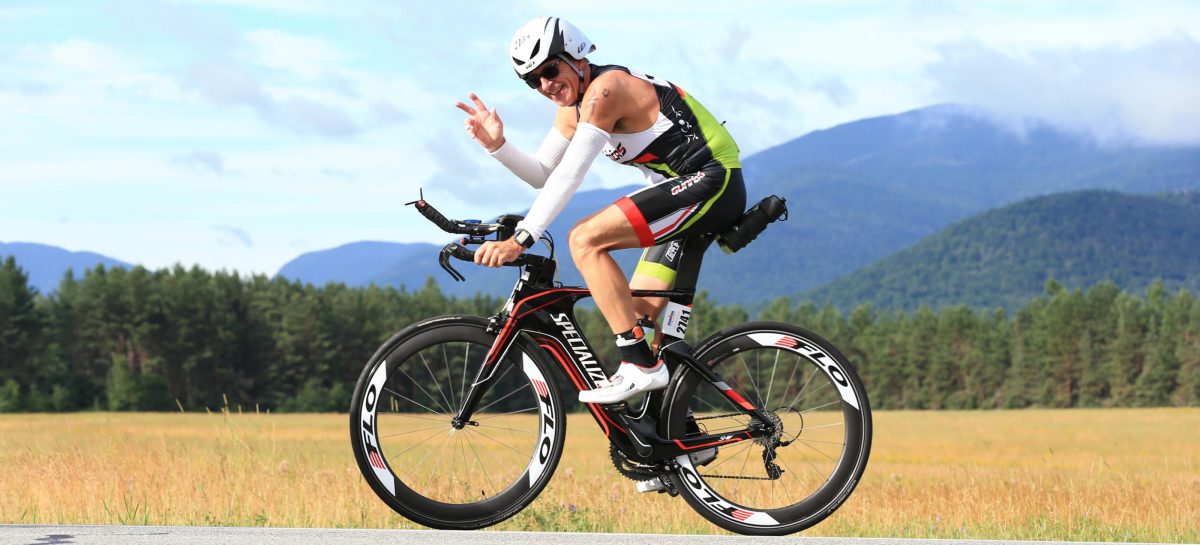
I started running for the same reasons most people do – to drop some pounds, feel better, and give this bored guy something to do. Most people lose interest in running after a while, but I caught the competitive bug. I got to a point where I wanted to see if I could add an extra mile, if I could lower that mile pace time, if I could complete a 10K. When I started racing I was hooked and always looking to perform at my best.
Some people can enter a race and not actually race it, but not me. I need to know how I did against others, against the clock, and against my previous efforts. How else do you know how well you are performing if you aren’t comparing yourself to those parameters?
When I race I have found over the years that I will be in the upper middle of the pack, somewhere around 25-30% of the field. This plays out during the race and is very apparent in the results at the end of the race. I have finished in first place overall once, been a top-three age grouper in many other races, and have been squeaked out of a podium finish many, many times. There is always a post-race analysis of the finisher results for me. How did I do overall? How did I do against the other males? Against the other age groupers? Against my past efforts? But does the analysis make me feel any better? Generally, I’m happy to receive any award at all, and if I do better than the average then I am content. However, if I just miss out on getting on the podium, I am going to mull that over for a while. What if I hadn’t pushed too hard at the beginning of the race? What if I didn’t waste so much time in transition from swim to bike? Where could I have gotten faster?
I read an interesting article (Inc. Magazine – Haden, Jeff) today about how counterfactual thinking can affect your happiness. In the article, it points to a study in which the faces of the gold/silver/bronze medallists at the 1992 Summer Olympic Games were examined to determine who was the happiest. Of course, the gold medal winner was happy. But the big surprise was that the bronze medalists were almost always more happy than the silver medalist. The gold medalists came out on top and were super happy. The bronze medalist is the one who beat out all the rest to be in the top three. But the silver medalist is the one who will be thinking about what went wrong.
Counterfactual thinking is an interesting concept. Basically with counterfactual thinking, you find yourself wondering “what if?” in certain outcomes and play out alternatives in your mind. The silver medalists will use upward counterfactual thinking, judging themselves only against the gold medal winner according to the article. They will dwell on the second-place finish, thinking about what they needed to do to win. The bronze medalists often employ downward counterfactual thinking, comparing themselves to the others who missed out on the podium. They are elated not to be in that group. Whew! Pretty interesting concept.
Although I think I’m aging past the point of dwelling on my placement in the field, there’s still the old guy age group that makes a difference for me. But now I have a little more insight into how to make myself feel better about my performances. Being thankful to still be in the hunt is feeling pretty good right now.



A first-place a/g win and two second-place a/g wins at Manteno Triathlon over the years. I think I look pretty happy in all three!
 an amazing run