I was on a ten-mile run the other day, which I stretched into almost twelve, when I started thinking about running longevity and why I have been running for as many years (about 37) as I have. You can look at longevity in a couple of different ways, but for me, I was generally thinking about how I have been able to keep putting one foot in front of the other for as long as I have. Here are some of the things that came to mind in my experience:
Running Builds Strong Joints
My neighbor will ask me on occasion if my knees are still holding up. He’s amazed that a runner like me can run and not wear out my knees, yet he’s done no running at all and hobbles around on achy joints. I’m a firm believer in “use it or lose it”, and studies have shown that running is a benefit to the joints in your lower body (Northwestern Medicine article). Yes, I have overdone it and had knee pain. I had a spell of knee discomfort for the past couple of years. But this year has been injury- and pain-free, and I’m not really sure what I am doing differently. So I have to believe that running has actually benefited my overall health in ways beyond just cardiovascular health and weight management.
Attitude
Some people wouldn’t run if their hair were on fire. Somehow, for me, I took up running, got through the “this sucks” phase, and started having fun pushing my limits. Getting over the five-mile mark one day, I had an epiphany. I felt like I could have gone many more. Once I wasn’t finding the effort to start to be a challenge, I started working on getting faster, and getting faster led to running races. I now had a reason to keep running other than just to keep the waistline in check.

Having Running Goals
I just mentioned how racing was a dangling carrot for me, and having goals in running certainly is a reason I keep toeing the start line. Unless the race was a real dog, I almost always signed up again the following year because I wanted to be faster or place higher in my age group. At a certain point, I might have grown tired of a certain event, or did as well as I possibly could. It’s then that I might change direction and look for other races and running goals to pursue. For example, I declared in 2024 that I was done running the Chicago Marathon and marathons in general because I think that I have accomplished all that I wanted to, marathon-wise. My personal marathon best was set at Chicago. I qualified for the Boston Marathon three times there. I just don’t know if the event is what I want anymore. So I have shifted gears and am now mostly focused on ultras and other newer-style events that I have yet to experience.
Adapting to Aging as a Runner
You can’t stop aging, and I have found that trying to run with the same intensity that I did in my younger days is not possible. I’ve had to shift and refocus. Switching from marathon running to ultramarathon running would seem like I would be making matters worse for myself, but I have experienced the opposite. Ultras require you to run slower, running slower means less wear and tear, less wear and tear means I can wake up the morning after a long training run and not feel like I have been hit by a truck. It’s pretty common for a runner to feel beat up after racing a marathon. But when I finish a similar distance training run, building to an ultra, I can have another productive run the following day without much soreness.
I owe a lot to changing my pacing for longer distances. When I started running ultras, and in particular, backyard ultras, I found that using a run/walk method of 2 minutes each was about perfect for me. Now, when I run any training run of ten miles or longer, I will almost always use the 2-minute run/walk as my pacing plan.
Triathlon as Cross Training
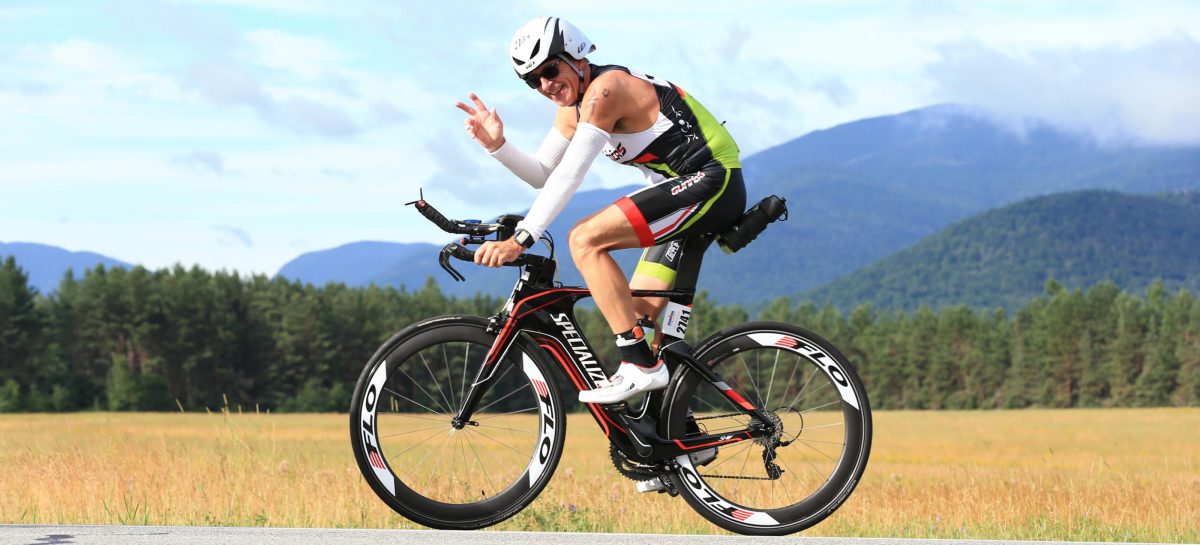
Before I took up triathlon, my running was somewhat stagnant. I had plateaued; I wasn’t getting any better, and I was becoming bored with running. My buddy John kept putting triathlon in my ear, and I finally joined him and his brother Dave in racing tri’s. That forced me to add swimming and cycling to my workout routine. The biking helped strengthen other parts of my legs. And I had to cut back on running to fit swimming and biking into my day. The reduction in my running miles was key because I was spending too much time running without the benefit of getting faster. The marathon PRs and the BQs both came after I started doing triathlons.
To add to that, triathlon was my introduction to following a training plan. Before that, I was just winging it. Following a training plan taught me how to build in phases, keep the workouts in Zone 2 mostly, and keep the race pace stuff for races rather than going at it hard in training. It definitely improved my ability to train smart and make it through 30-weeks of training to get to race day without being injured or burned out.
Laying off when necessary
In 2015, I started a running streak. Being a “streaker” in running generally means that you consecutively run at least one mile a day. My streak was great for me until I started to get a little burned out, and I felt like I was overtraining. I was tired of having to put in a mile after big races as well. So I decided to end the streak. You can read about my streak here: RIP Running Streak
Also, I’ve learned to skip it when I don’t feel like it. It doesn’t happen often, but sometimes life has other things to take care of, and I don’t worry about missing a day when I decide to.
What Can I Improve On
I feel like I’m pretty dialed in with my approach to running, but there are some areas I can improve on. People often say weight training is a benefit. I really dislike weight training. I don’t really like any of it – being at a gym, the physical lifting of the weights, the boredom of it, and the fact that it often doesn’t seem tangible to me. I should probably focus on building abdominal core strength. That would improve my running fitness, as well as my overall fitness. And yes, I should stretch more. I also loathe stretching. And lastly, nutrition and diet could use some improvement. Now that my wife and I are both retired, I believe that we both desire to eat healthier foods.
Conclusion
Running for me was something that I grew into and grew to love. I can’t imagine not having running in my life. Missing a day used to make me miserable, but I’m smarter about having a day off to give my body a chance to recover. I’m grateful that over the years I was able to have a long running experience that I intend to keep building on.
What have you found in running that has given you longevity? I’d love to hear. Thanks for reading.

 an amazing run